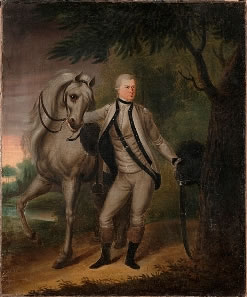
Horry County (don’t pronounce the “H”), home to Myrtle Beach and the surrounding beach communities, was named for a Revolutionary War hero whose life was both illustrious and filled with frustration and self-doubt.
Peter Horry’s attempts at preserving his legacy were repeatedly thwarted—first, his biography of his comrade-in-arms Francis Marion was mangled; then a major portion of his own memoirs was lost. Finally, the insult of a misinscribed age on his gravestone capped a life of underappreciated service. Yet, in 2006—192 years after his death—Peter Horry was finally inducted into the South Carolina Hall of Fame, located fittingly in the county that bears his name. Visitors can explore the Hall of Fame for free at the Myrtle Beach Convention Center during regular business hours.
Much of what is known about Peter Horry comes from a 20-page booklet by Dr. Roy Talbert, a history professor at Coastal Carolina University in Conway. His article, “So Fine a Beach: Peter Horry’s Summer of 1812,” was published as part of the school’s 1998 Distinguished Teacher-Scholar Lecture Series.
Early Life
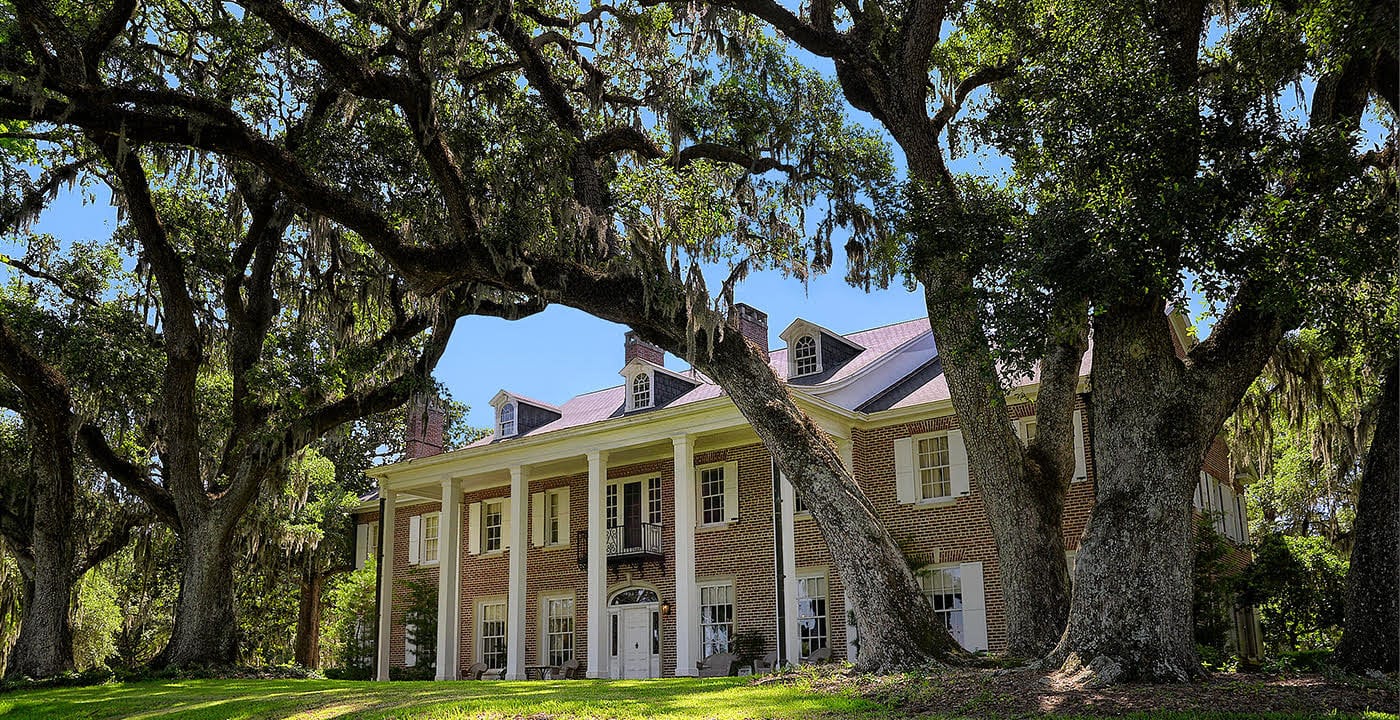
Peter Horry surprisingly never lived in the county that’s named after him. He was born on March 12, 1743 (or possibly 1744) in Georgetown County, a third-generation American descended from French Huguenots. According to Talbert’s notes from an 1812 journal entry, Horry had three brothers (one older, two younger) and a younger sister. The Horry family were rice planters and enslavers, owning around 1,700 acres south of Georgetown.
Horry attended the free Winyah Indigo Society School and later endured an unpleasant apprenticeship with a Georgetown merchant.
Horry's Rise Through the Ranks
In 1775, Horry was elected captain—fifth in rank out of 20—by the Provincial Congress of South Carolina and assigned to the Second South Carolina Regiment. Francis Marion, ranked two slots above him, served alongside Horry. By 1776, Horry had been promoted to major, and by 1779 he was a lieutenant colonel in the Continental Army’s Fifth Regiment. At the same time, he held a full colonel’s commission in the state militia.
In 1780, several regiments were merged, and Horry briefly found himself without a command. Though his pride was wounded, this also meant he avoided capture when Charleston fell to the British. Marion wasn’t present either, leaving the two men free to lead a guerrilla resistance force in South Carolina’s Lowcountry.
“This is when the stuff of legends was born,” writes Talbert, referencing the swamp ambushes popularized in the film The Patriot. Anecdotes about Horry’s exploits during this time are often based on his own storytelling, though the original manuscripts have vanished.
One humorous story claims Horry’s men affectionately called him “Stuttering Pete.” A well-known excerpt from the 1830 American Military Biography, cited in Catherine Lewis’s Horry County, South Carolina, 1730–1993, recalls a moment when Horry was too tongue-tied to give the command to fire:
“It was fi-fi-fi-fi—but he could get no further… At length, irritated almost to madness, he exclaimed, ‘Shoot, damn you, shoot—you know very well what I would say—shoot, shoot, and be damned to you!’”
Conflict and Command
Other tales portray Horry as a better swordsman than horseman. Once, he was left hanging from a tree branch, yelling for help after falling off his horse. Another time, his men became too drunk to fight, forcing a retreat to camp. Despite these incidents, Horry fought hard, was wounded multiple times, endured illness, and led the Swamp Fox Brigade when Marion was away.
In 1781, Horry’s military career hit another obstacle. He was appointed “Lieutenant Colonel Commandant of a Battalion of Light Dragoons for the State of South Carolina.” However, another officer, Hezikiah Maham, was given the same title for a second unit, sparking a feud. Though Horry had seniority, Maham refused to acknowledge it.
Horry complained to both Marion and General Nathanael Greene. When Marion left in 1782 to attend a state senate meeting, the conflict escalated. Eventually, the two units were merged—under Maham’s command. Horry was reassigned to Georgetown, but only for two months before being relieved of duty. It was his final military command.
Peace, Politics, and Publication Woes
After the war, Horry and Marion reconciled. Both continued serving in the state militia, and in the mid-1790s, Horry was promoted to brigadier general. He retired in 1806.
Following Marion’s death in 1795, Horry compiled letters and documents to write a biography of his old friend. He entrusted the manuscript to Mason Locke “Parson” Weems, an Episcopal minister known for romanticizing history—including fabricating the infamous George Washington cherry tree story.
The result, The Life of General Francis Marion, was a sensationalized distortion. A.S. Salley, writing for the South Carolina Historical and Genealogical Magazine in 1937, stated:
“Weems changed most of the statements from truth to falsehoods, invented and inserted many things that had never happened and called it a life of Marion… To Horry, Weems acknowledged that he had written a ‘military romance.’”
Despite Horry’s vehement repudiation, later editions falsely credited him as co-author alongside Weems.
Later Years and Legacy
Peter Horry married late in life, in 1793 at around age 49, to Magdalen Guignard of a wealthy Columbia family. The couple had no children.
Horry was still alive when Horry County was named in his honor in 1801. Three years earlier, Marion County had been named after his lifelong friend.
Horry spent his final years at a farmhouse outside Columbia, where he continued writing in his journal. He died on February 28, 1815, at age 71 or 72—despite his grave marker incorrectly stating 68.
His 1812 journal entries provide the richest insight into his character, ambitions, and disappointments.
A Fitting, Belated Tribute
“He was a neglected and fascinating man,” Talbert said in 2006. “He was a frustrated author… He tried to get his war book published and failed, then he gave it to Weems and he messed it up. He did the journal, and one of the last things in his journals was he wanted to get it published, but it hasn’t been.”
Talbert added:
“He was fascinating because his claim to fame was he was there when Francis Marion needed him… and because he is Francis Marion’s biographer.”
“He felt very neglected in his old age, and he would be really pleased to be… in the South Carolina Hall of Fame.”
Find Top Myrtle Beach Hotel Deals
Save as much as 35% on some of the Grand Strand’s most popular resorts!